New Era of Autonomous Driving: Momenta Leads the Commercial Leap from L2 to L4 with Technical Depth
Keywords: autonomous driving, urban NOA, L2 assisted driving, L4 autonomous driving, technology R&D, commercialization
Introduction
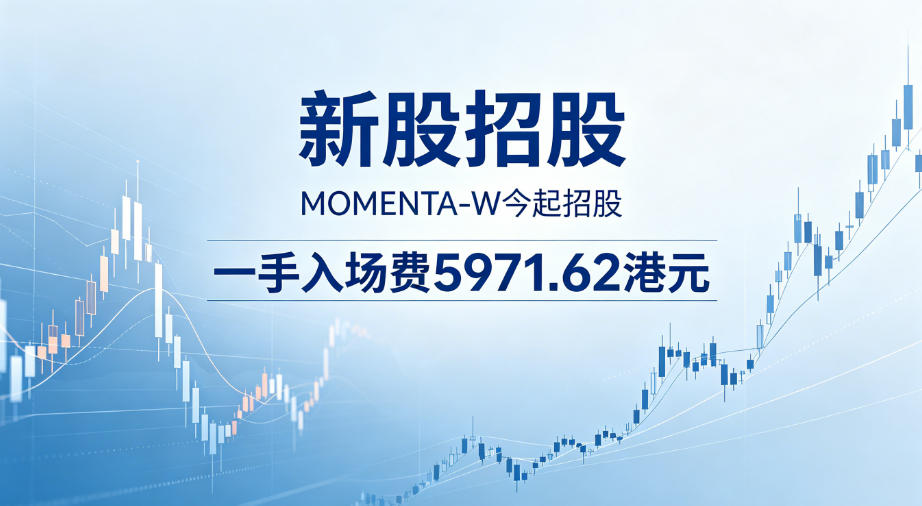
On June 29, 2026, the autonomous driving sector marked a milestone: Momenta (MOMENTA-W, 06880.HK) officially launched its global offering at an offer price of HK$295.60 per share, with expected net proceeds of about HK$5.6146 billion. Ranked first globally among independent smart-driving solution providers, the company is showing capital markets a full picture of autonomous driving moving from the lab to large-scale mass production through technical depth and commercialization capability. This article analyzes how Momenta uses algorithms, computing power, and a data closed loop as its foundation to drive the leap from L2 to L4 and reshape the future of mobility and logistics, from four dimensions: technology evolution, R&D investment, commercialization path, and ecosystem collaboration.
1. From Urban NOA to L4: Technology Evolution and Market Position
Momenta's core competitiveness lies in its dual-engine strategy of mass-production vehicle solutions and large-scale autonomous mobility applications. According to China Insights Consultancy, as of February 28, 2026, both the sales volume of vehicles equipped with Momenta's urban NOA solution and the cumulative number of mass-production vehicle models ranked first among independent smart-driving solution providers worldwide. This achievement is no accident; it is built on a deep understanding of complex urban traffic scenarios.
Urban NOA (Navigate on Autopilot) is the most technically demanding application in L2 assisted driving, requiring vehicles to independently change lanes, overtake, enter and exit ramps, and respond to traffic lights and pedestrians without a high-definition map or with only partial prior information. Through a hybrid architecture of data-driven plus rule-based fallback, Momenta has achieved full-chain closure across perception, prediction, planning, and control at the algorithm level. The key is to train deep learning models with massive real-world driving data while introducing a reinforcement-learning-based decision framework, enabling vehicles to make safe and human-like decisions even in unfamiliar scenarios.
Notably, Momenta is in the early deployment stage of L3/L4 autonomous driving. L3 means the driver can fully let go under specific conditions, while L4 requires the vehicle to achieve fully driverless operation within a defined area. Momenta's technical route does not rely on a single-sensor solution; instead, it uses a vision-first, multi-sensor fusion approach to reduce dependence on expensive hardware such as lidar, thereby balancing cost and performance. This incremental evolution path allows it to obtain massive data through mass-produced L2 solutions while also accumulating training material for higher-level autonomous driving, creating a data flywheel effect.
2. A Deep Dive into R&D Investment: Algorithms, Computing Power, and Talent
According to the prospectus, Momenta plans to use about 60% of the net proceeds for R&D, with 40% allocated to improving AI computing capacity and data storage, and 20% directly used to expand the R&D team. This allocation reflects the three core pillars of autonomous driving R&D: algorithm iteration, computing infrastructure, and talent reserves.
At the algorithm level, Momenta's main algorithm stack covers perception, prediction, and planning. On the perception side, its independently developed Vision Transformer architecture can extract 3D spatial information from 2D images and, combined with temporal modeling, enable precise tracking of dynamic obstacles; the prediction module uses graph neural networks to model interactions among vehicles, pedestrians, bicyclists, and other road users, outputting multi-modal trajectories for the next few seconds; the planning module adopts safety field theory, combining vehicle dynamics constraints with quantified scenario risk to generate comfortable and executable trajectories. Continuous optimization of these algorithms relies on a closed-loop automation toolchain: corner cases are generated through a simulation engine and then automatically fed back into model training, creating a rapid iteration cycle of data collection → labeling → training → validation → deployment.
Computing infrastructure is the key support for training on massive data. Momenta plans to use 40% of its R&D funds to boost AI computing power and data storage capacity. Today, training autonomous driving models typically requires thousands of GPUs working in parallel, and data from urban NOA scenarios can reach the petabyte scale. Momenta is building its own cloud training platform, using technologies such as mixed-precision training and model distillation to reduce computing costs, while protecting data privacy through a federated learning framework. For data storage, it uses distributed object storage and hot/cold tiering strategies to ensure efficient retrieval and reuse of historical data.
Talent reserves are the foundation of technical commercialization. Momenta plans to use 20% of its R&D funds to expand its R&D team, with a focus on recruiting top talent in computer vision, reinforcement learning, and system architecture. In the autonomous driving industry, top algorithm engineers often earn annual salaries exceeding US$1 million, and Momenta attracts and retains core talent through equity incentives (such as cornerstone investors including Gaoyi entities and ChinaAMC) and project-based management.
3. The Commercialization Path for Robotaxi
In addition to mass-production vehicle solutions, Momenta will allocate 20% of the net proceeds to accelerate the commercialization of L4 autonomous ride-hailing vehicles (Robotaxi). This layout is not just theory; it is based on both its technical accumulation and ecosystem partnerships.
On the technical side, Momenta's L4 solution shares the underlying algorithm architecture with its L2 solution, but it has been specifically optimized for driverless scenarios: for example, redundant sensors such as 4D millimeter-wave radar and lidar are added, along with dual computing units, to achieve full-stack redundancy in the safety system; at the same time, a remote monitoring and takeover mode is introduced, allowing cloud operators to provide assistance in extreme situations. At present, Momenta is testing autonomous ride-hailing vehicles in multiple cities in China and overseas, with a fleet of more than 100 vehicles and cumulative test mileage exceeding 10 million kilometers.
The key to commercialization is scale. Momenta plans to conduct joint marketing campaigns with OEMs and mobility platforms, such as collaborating with Mercedes-Benz Group, one of its cornerstone investors, to develop customized Robotaxi services for the premium mobility market, or working with mobility platforms such as DiDi and Uber to reduce per-vehicle operating costs through a fleet operation plus on-demand service model. According to China Insights Consultancy, the global Robotaxi market is expected to exceed US$50 billion by 2028, and Momenta is well positioned to capture more than 10% market share thanks to its first-mover advantage.
4. Cornerstone Investors and Synergy Across the Technology Ecosystem
This IPO attracted more than ten well-known institutions, including GIC, Fidelity International, BlackRock, and Mercedes-Benz Group, as cornerstone investors, with total subscriptions of about US$375.8 million. This list is not only an endorsement of capital, but also reflects the deeper meaning of synergy across the technology ecosystem.
Mercedes-Benz Group, as a strategic investor, shows the trust of traditional automakers in Momenta's technical strength. In the future, both sides may deeply integrate Momenta's urban NOA solution into premium models, and may even jointly develop a platform for L4 autonomous driving. BlackRock and Fidelity International, as representatives of long-term capital, are focused on Momenta's technical moat and profit potential—the company entered China's top five in the L2 assisted driving solution market in 2025, and its global expansion, with the international offering accounting for about 90%, will further raise its market share.
In addition, industrial investors such as GigaDevice and Suzhou Expressway have also joined. As a leading domestic MCU and memory chip company, GigaDevice can provide Momenta with cost-effective automotive-grade chip support; Suzhou Expressway is expected to provide venues and policy resources for Robotaxi road testing and commercial operations in the Yangtze River Delta. This dual engine of capital plus industry is building Momenta's unique ecosystem moat.
Conclusion
At a critical point when the autonomous driving industry is moving from a technology race to large-scale deployment, Momenta is writing a commercialization model for the leap from L2 to L4 by leveraging its leading position in urban NOA, early L4 deployment, and a clear R&D investment path. Its fundraising plan—60% for R&D, 20% for Robotaxi commercialization, and 10% to strengthen mass-production vehicle solutions—together outlines a development roadmap centered on data-driven, algorithm-centric, and ecosystem-synergistic growth. The strong market response is both recognition of its technical depth and an expectation of future mobility transformation. Of course, facing powerful rivals such as Tesla FSD and Huawei ADS, whether Momenta can continue to maintain a technological lead still depends on answers from mass-production validation and large-scale cost reduction. But it is foreseeable that once L4 Robotaxi achieves a commercial closed loop, Momenta will no longer be just a solution provider, but a shaper of the new global intelligent mobility landscape.