Samsung Electronics and SK Hynix ADR Divergence: HBM Technology Competition Reshapes the Asian Storage Chip Landscape
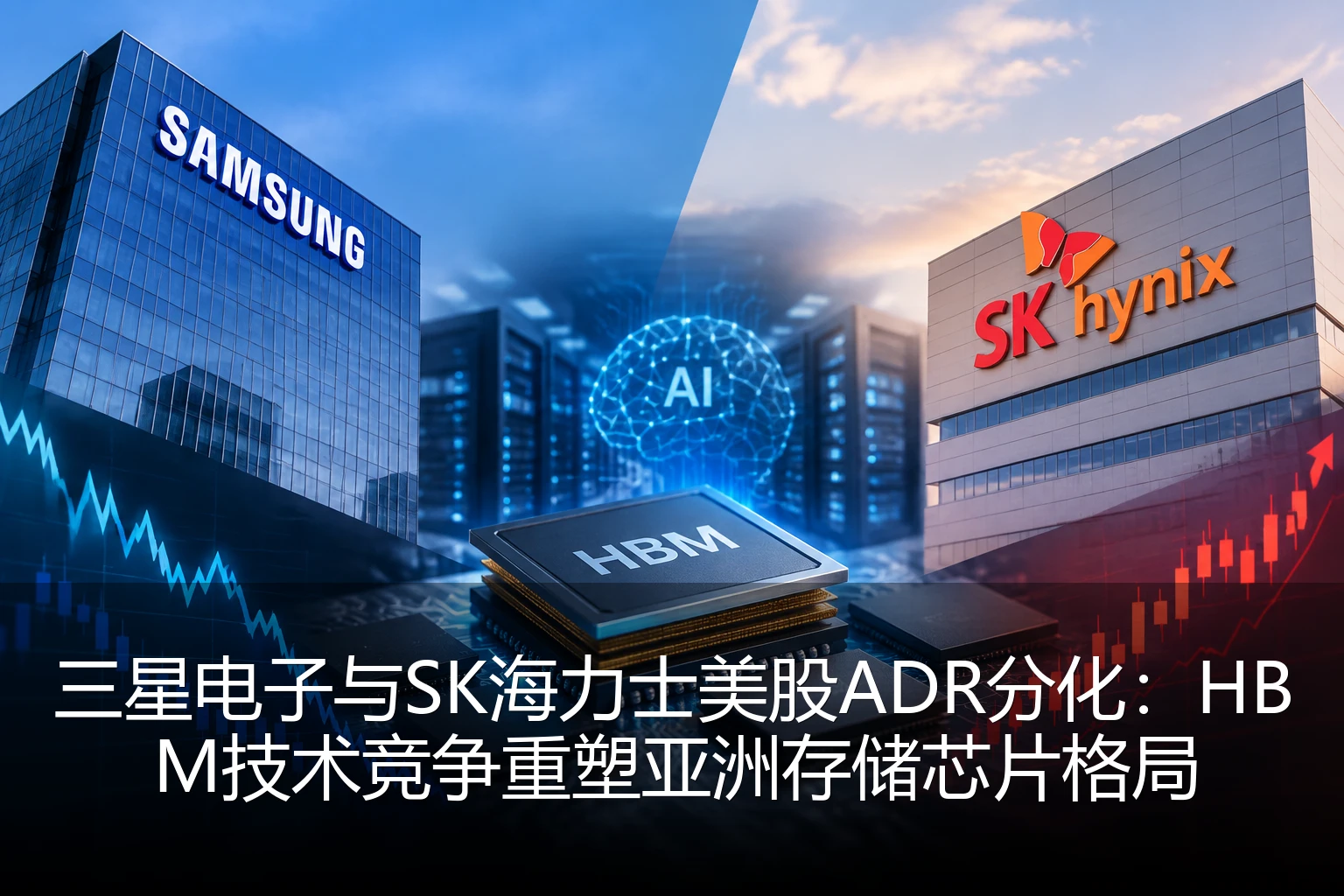
In September 2026, the US stock market for Asian storage chips showed a distinct divergence in trends. As industry leaders, Samsung Electronics ADR and SK Hynix ADR trends are markedly different, reflecting the differences in their AI storage technology strategies. This divergence not only affects investor confidence in the storage chip sector but also reveals how HBM (High Bandwidth Memory) technology competition is reshaping the landscape of the Asian storage chip industry.
US ADR Market Performance Divergence
As of the closing on September 17, 2026, Samsung Electronics ADR showed a quarterly increase of 8.2%, while SK Hynix ADR showed a quarterly increase of up to 23.5%, outperforming the average storage chip sector by nearly 15 percentage points. This divergence was particularly evident in the last month, with SK Hynix ADR rising by 12.7%, while Samsung Electronics ADR fell by 3.2%.
Market analysts point to the differences in HBM technology progress as the main source of this divergence. Industry data shows that SK Hynix has achieved a breakthrough in HBM4 technology and has obtained official certification from NVIDIA, whereas Samsung Electronics is also actively developing HBM4 but its certification process lags behind. This gap directly impacts market expectations for the future performance of both companies.
HBM Technology Competition Landscape
With the explosive growth in AI computing demand, HBM has become the focal point of competition among storage chip companies. HBM technology offers advantages in high bandwidth and low power consumption, making it particularly suitable for AI training and inference scenarios. Market research institutions predict that the global HBM market size will reach $22 billion in 2026, with a compound annual growth rate exceeding 40%.
SK Hynix has established a clear technological advantage in the HBM field. The company recently announced that its HBM4 product can improve efficiency by 30% and achieve a yield rate breakthrough of 80%. More importantly, SK Hynix has obtained official certification from NVIDIA, making it one of the preferred suppliers for its AI chips. This partnership not only brings stable orders to SK Hynix but also enhances its technological standing in the industry.
In contrast, while Samsung Electronics is comparable to SK Hynix in HBM3 technology, it lags slightly in HBM4 progress. According to insider information, Samsung Electronics plans to relocate part of its HBM4 production line to Austin, USA, to cope with US government technology restrictions, but this adjustment also delays its HBM4 mass production timeline.
Traditional DRAM Business Weighs Down Samsung Electronics
In addition to the gap in HBM technology, the performance differences in the traditional DRAM business are also a reason for the divergence in US ADR trends.
In the second quarter of 2026, DRAM contract prices rose for two consecutive quarters, marking the formal entry of the storage industry into a recovery cycle. However, Samsung Electronics' DRAM business revenue grew by only 15% year-over-year, lower than SK Hynix's 28%. Market analysts believe this is mainly due to Samsung Electronics' relatively slow pace of technological iteration on mainstream products like DDR5 and LPDDR5X, putting it at a disadvantage in price negotiations.