Semiconductor Industry: Technology Innovation Drives a New Investment Landscape
Keywords
Semiconductors, chip manufacturing, artificial intelligence, advanced process nodes, IPO, geopolitics, global stock markets, market volatility, technological breakthroughs, investment opportunities
Introduction
In today’s world, where the digital wave is sweeping across the globe, semiconductors are the foundation of the modern electronics industry and their importance is self-evident. From smartphones to cloud computing, from autonomous driving to artificial intelligence, semiconductor chips are everywhere. Yet in recent years, the global semiconductor industry has been undergoing unprecedented change: faster technology cycles, intensified geopolitical rivalry, and frequent market swings have together created a complex yet opportunity-rich ecosystem. This article will examine the current state and future of the semiconductor industry from the perspectives of technology trends, market dynamics, and investment opportunities.

Figure 1: In 2025, global stock markets swung sharply under the influence of multiple factors, with semiconductor stocks among the first to be hit
1. Strategic Position and Technological Evolution of the Semiconductor Industry
The semiconductor industry is not only capital- and technology-intensive, but also a core measure of national competitiveness. Today, the global semiconductor market has exceeded $500 billion and is expected to break the $1 trillion mark in the coming years. This growth is mainly driven by explosive demand in emerging fields such as artificial intelligence, the Internet of Things, 5G communications, and new energy vehicles.
From a technological evolution perspective, although Moore’s Law is facing physical limits, the industry is extending performance gains through material innovation, architectural optimization, and advanced packaging. 3nm process technology has already entered mass production, 2nm process technology is in R&D, and breakthroughs below 1nm will depend on the maturity of new semiconductor materials such as carbon nanotubes and two-dimensional materials. In addition, Chiplet technology integrates multiple functional modules within a single package, becoming an effective way to overcome the area limitations of a single die.
In the field of AI chips, the performance of specialized processors such as GPUs, TPUs, and NPUs continues to improve, while interconnect technologies such as HBM (High Bandwidth Memory) and CXL (Compute Express Link) are also advancing rapidly. These technological gains are directly driving a computing-power revolution in downstream applications.
2. Dual Challenges of Global Market Volatility and Geopolitics
The semiconductor industry is highly globalized, and therefore highly vulnerable to geopolitical shocks. In recent years, U.S. export controls on chips to China, Japan and the Netherlands’ restrictions on lithography equipment, and efforts by various countries to build their own chip supply chains have profoundly reshaped the global semiconductor landscape. Since 2025, global stock markets have seen pronounced volatility due to interest-rate policy, inflation pressure, and geopolitical conflicts. As a growth sector, semiconductor valuations and market sentiment are closely linked.
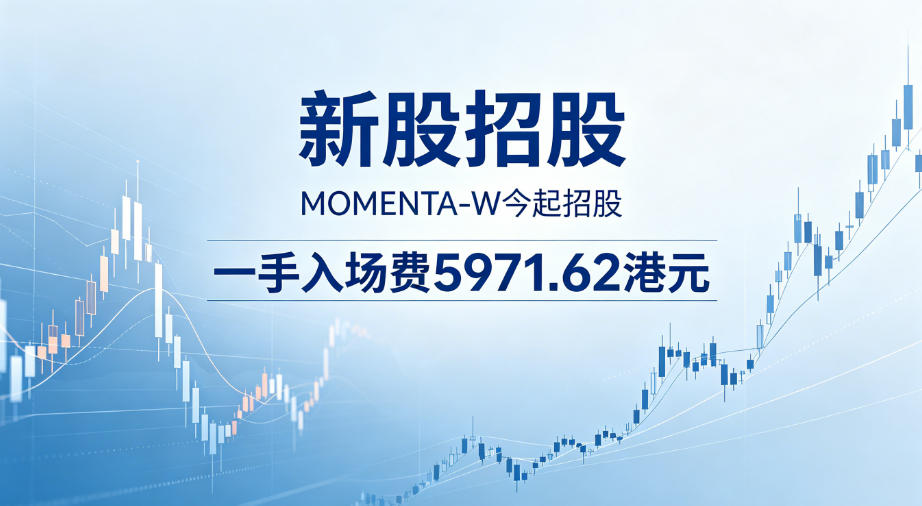
Figure 2: The IPO subscription details of a semiconductor company show that market enthusiasm for quality chip stocks remains strong, and the minimum trading lot price reflects the entry threshold for institutions and retail investors
The image above shows the IPO details of a company called “Momentum” in the Hong Kong market. The minimum trading lot cost for the stock is HK$5,971.62, reflecting investors’ high expectations for a new semiconductor listing. During an IPO window, the market often assigns a higher valuation premium to semiconductor companies with strong technological barriers, which also indirectly confirms the industry’s long-term positive logic.
However, short-term volatility cannot be ignored. Since Q2 2025, affected by escalating global trade frictions, the semiconductor index once pulled back by more than 15%. But professional investors generally believe that cyclical corrections are precisely what create opportunities for long-term positioning. The key is to identify companies with core technological advantages, customer stickiness, and supply-chain resilience.
3. Investment Themes: AI Chips, Advanced Packaging, and Domestic Substitution
1. AI chip demand continues to surge
The rise of generative AI has driven computing-power demand to grow exponentially. Whether it is OpenAI’s GPT series or domestic large-model vendors, all are creating rigid demand for high-performance training chips and inference chips. While Nvidia remains dominant, AMD, Intel, and a large number of startups are also accelerating their catch-up efforts. In addition, customized ASIC chips are gaining favor in cloud and edge-computing scenarios thanks to their better energy efficiency.
2. Advanced packaging is becoming a new growth driver
As process technology approaches its physical limits, advanced packaging has become a key path to improving chip performance. Technologies such as 2.5D/3D packaging, fan-out packaging, and hybrid bonding can deliver higher integration and lower power consumption. TSMC’s CoWoS and Samsung’s I-Cube solutions are in short supply, and related companies in equipment, materials, and design services are all benefiting.
3. Domestic substitution has vast room to grow
The self-sufficiency rate of China’s semiconductor supply chain remains low, especially in areas such as EDA tools, lithography machines, and high-purity chemicals. On the policy side, the National Integrated Circuit Industry Investment Fund continues to inject capital, while local industrial parks are being built at an accelerated pace. On the corporate side, wafer foundries such as SMIC and Hua Hong Semiconductor are actively expanding capacity, and equipment makers such as Naura Technology Group and AMEC are making continuous breakthroughs. Despite mounting external pressure, the logic of domestic substitution has never been clearer.
4. Industry Risks and Response Strategies
Although the outlook is bright, semiconductor investing requires caution regarding the following risks:
- Technology cycle risk: Chip industry technology paths change quickly. If a company loses its leadership edge, it may face the risk that huge R&D investments cannot be recouped.
- Geopolitical uncertainty: Export controls and tariff barriers may escalate at any time, affecting a company’s supply chain and overseas markets.
- Cyclicality: The semiconductor industry has a typical “silicon cycle.” When demand is strong, capacity is tight; when demand slows, capacity becomes excessive. Investors should watch leading indicators such as inventory levels and capital expenditure plans.
- Excessive valuations: The P/E ratios of some popular names are already at historical highs, so downside pressure from a pullback must be guarded against.
Response strategy: Investors can diversify their holdings (for example, holding names across equipment, design, and packaging/testing segments), focus on cash flow and R&D spending, and adjust positions based on macroeconomic and industrial policy changes. Long-term thinking is the key to navigating cycles.
5. Outlook: A New Semiconductor Narrative in the Intelligent Era
Looking ahead to 2026 and the years beyond, the semiconductor industry will enter a diversified development phase in the “post-Moore era.” On one hand, AI will continue to drive compute upgrades from cloud to edge, and end devices such as autonomous driving systems, robots, and AR/VR will be equipped with more powerful edge AI chips. On the other hand, emerging directions such as quantum computing, photonic computing, and neuromorphic computing are expected to prove their feasibility in small-scale application scenarios.
At the same time, countries around the world have reached an unprecedented level of awareness regarding semiconductor supply-chain security. The U.S. CHIPS and Science Act, the EU Chips Act, and Japan’s semiconductor revitalization plan will all channel hundreds of billions of dollars into the sector. This will intensify competition, but also foster cooperation and innovation. For Chinese companies, building an independent and controllable ecosystem is not only a matter of survival, but also a necessary path toward becoming a global science and technology power.
Conclusion
The semiconductor industry is at a critical inflection point of technological breakthroughs and industrial restructuring. Although global stock market volatility and geopolitical tensions have created short-term uncertainty, the underlying logic of long-term industry growth—the endless expansion of computing-power demand—has not changed. For investors, only by understanding technology trends, grasping the main investment themes, and managing risk prudently can they share in the dividends of this semiconductor revolution. Whether betting on AI chip giants or positioning in emerging domestic substitution leaders, one must adhere to the principles of value investing and long-termism. The semiconductor world of the future will belong to the wise and the resilient.
The data and views in this article are for reference only and do not constitute investment advice. Markets involve risk; invest with caution.